Connect to God Prayer Quote
A Designer’s First Glance: Quiet Strength, Not Ornament
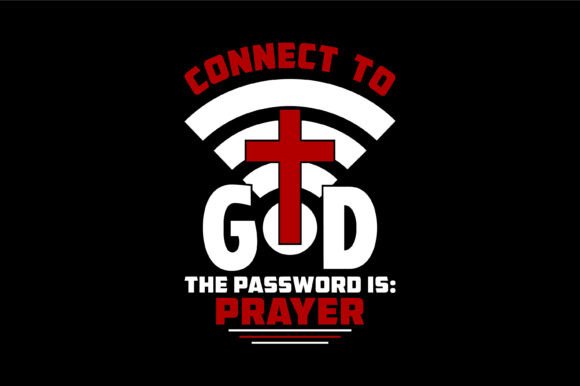
When Connect to God Prayer Quote landed in my inbox, I didn’t see a “cute religious design.” I saw a rhythm—soft curves, open spacing, and a gentle hierarchy that breathes. It’s not loud or decorative; it’s grounded. The lettering leans slightly organic—not rigidly digitized, not overly scripty—and the phrase itself lands with sincerity, not sentimentality. That matters. As a designer who ships embroidered tote bags for faith-based boutiques and personalizes baby blankets for new parents, I know how quickly a prayer quote can tip from meaningful to mawkish. This one doesn’t. Its visual personality fits naturally on a linen tea towel for a pastor’s kitchen, a soft cotton sweatshirt for a women’s Bible study group, or a minimalist nursery pillow cover—never shouting, always present.
Where It Lives Best: Real Projects, Real Fabric
I tested Connect to God Prayer Quote across three real-world builds: a medium-weight canvas tote bag (for a local church fair), a French terry sweatshirt (custom order for a counselor), and a 100% cotton baby onesie (gift for a baptism). In every case, the design held its clarity without overloading the fabric. On the tote, the balanced line weight and generous letter spacing prevented stitch crowding—even at 4.5 inches wide. On the sweatshirt, the moderate stitch density meant no puckering or stiffness around the collar seam. And on the onesie? It stitched cleanly with lightweight tear-away stabilizer and standard poly thread—no bobbin shadow, no skipped stitches in the subtle curve of the “G” in “God.”
This isn’t a design built for flash—it’s built for wear. It shines in custom apparel, embroidered patch applications (heat-seal backing works well), and personalized gift contexts where emotional resonance outweighs visual complexity. Etsy sellers will find it especially strong for curated collections: “Faith-Filled Home Goods,” “Quiet Nurseries,” or “Thoughtful Holiday Embroidery.” It reads clearly in printable mockups and translates well into small shop branding—think monogrammed aprons for a Christian bakery or pillow covers for a boutique wellness studio.
Where to Pause—and Why
Not every surface welcomes this design equally. On curved surfaces like caps, the phrase’s horizontal flow stretches awkwardly over the crown unless resized carefully—test on scrap first and consider breaking it into two lines if needed. On thin fabric (like lightweight rayon blouses) or stretchy fabric (knits without proper stabilization), the satin-stitch edges can distort. I’d avoid it on sheer materials or tightly woven synthetics without a firm cut-away stabilizer underneath.
Dark fabric demands attention: the default thread palette may need adjusting for contrast—especially in smaller hoop sizes where fine details compress. Speaking of hoops: if you’re working under 4 inches, check whether the smallest letters (like the “o” in “to”) retain legibility after stitching. They do at 3.75", but barely—so for small hoop sizes, confirm the file includes a simplified version or be ready to tweak manually. Also, avoid layering it over seams or high-texture areas (like quilted jackets)—the fill stitch won’t hug irregular surfaces evenly.
What It Adds—Beyond the Thread
Connect to God Prayer Quote elevates more than just the item it’s stitched on. It adds handmade product credibility—not because it’s flashy, but because its restraint signals intention. Customers notice when embroidery feels considered, not copied. On an Etsy listing, it supports brand consistency for sellers building a cohesive aesthetic around peace, presence, or quiet devotion. For craft fairs, it boosts giftability: people buy it not as decor, but as comfort—something tactile and true. And professionally? It earns trust. A well-executed machine embroidery design like this tells buyers you understand both stitch integrity *and* emotional nuance.
It also performs quietly in commercial settings. A boutique owner told me she uses it on staff aprons—subtle enough for daily wear, meaningful enough to spark conversation. No logos, no slogans—just warmth, stitched clean.
Designer Notes You’ll Actually Use
- Always test on scrap fabric first—especially with your exact stabilizer combo and thread colors. What looks balanced on screen may shift on cotton twill vs. fleece.
- Review stitch density before hooping. If the fill areas feel heavy for your fabric weight, reduce density by 5–8% in your software.
- Confirm hoop size compatibility. This design scales well—but don’t assume the smallest version is optimized for 3" hoops without checking detail retention.
- Inspect corners and curves. Look for potential thread nesting in tight turns (like the lower loop of “g”)—a quick pause in your machine’s trim settings helps.
- Test black-and-white mockups. Does it read clearly on light *and* dark backgrounds? Adjust thread contrast accordingly.
- Use proper stabilizer: medium-weight cut-away for knits, tear-away for stable wovens, and fusible + tear-away for nap-free texture control.
- Verify licensing before selling finished items or bundling the digital embroidery file in a craft business kit. Some versions allow commercial use; others don’t—check before you list.
Final Thought: It’s Not Just a Phrase—It’s a Fit
Connect to God Prayer Quote doesn’t try to be everything. It’s not a bold statement piece for festival merch, nor is it delicate enough for heirloom lace. It lives in the thoughtful middle: the crafts space where meaning meets making. Whether you’re an Etsy seller curating soulful home goods, a small shop owner embroidering holiday gifts, or a designer building digital design assets for faith-centered clients—this is a reliable, resonant tool. It stitches true, reads clear, and carries weight without heaviness. In a world of noisy designs, that kind of quiet confidence is rare—and worth keeping in your working library.