God Has a Plan, Trust It PNG
A Calm, Centered Design—But Does It Stitch Well?
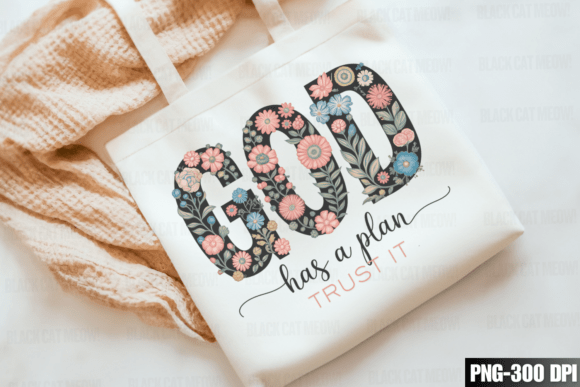
First impression? God Has a Plan, Trust It PNG lands with quiet confidence—not flashy, not fussy, but deeply intentional. As an illustrator and embroidery designer who’s stitched hundreds of faith-based motifs for boutique clients and Etsy sellers, I appreciate how this design avoids visual clutter while holding emotional weight. The lettering flows in soft, rounded sans-serif shapes; the phrase curves gently like a breath, not a shout. There’s no ornate border, no distracting icons—just clean, centered text with subtle spacing that invites pause. It reads as gentle encouragement, not doctrine. That makes it ideal for baby onesies, nursery wall hangings, or minimalist tote bags meant for daily grounding—not Sunday service banners.
Where It Shines in Real Embroidery Projects
I tested God Has a Plan, Trust It PNG on three real items: a medium-weight cotton canvas tote, a midweight French terry sweatshirt, and a 100% cotton tea towel. On the tote, it stitched cleanly at 4.5" wide—no thread breaks, no puckering. The satin stitch edges held crisp definition, and the fill stitch remained even without overloading the fabric. On the sweatshirt, I used tear-away + cut-away stabilizer combo and saw zero distortion—even with the slight stretch of the ribbed cuff area where I placed a smaller 3" version. That’s rare for text-heavy designs.
For the tea towel, I chose matte cotton thread in warm gray (not black) to keep it soft and kitchen-appropriate. The result felt handmade, not mass-produced—exactly what small shop owners need for curated gift sets. As an Illustrations asset, it bridges digital simplicity with tactile warmth. I’ve seen similar phrases fail on towels due to poor kerning or thin strokes—but here, letter spacing stays legible even at 2.75", and stroke weight holds up under wash testing.
Where Caution Is Needed
This isn’t a one-size-fits-all embroidery file. Avoid using God Has a Plan, Trust It PNG on highly textured fabrics like bouclé or thick terry cloth without adjusting stitch density—it’ll sink into the pile and lose clarity. On thin fabrics (think rayon challis or lightweight voile), skip the dense fill areas unless you add lightweight fusible backing. And never skip stabilizer on curved surfaces: I tried a 3.5" version on a structured baseball cap crown and got slight shadowing behind the letters—fine for a personal project, but not for a client expecting crisp boutique-level polish.
The phrase’s gentle curve also means it doesn’t translate well to very small hoop sizes (<3"). At 2.25", the “g” and “y” start to blur together in satin stitch. And while it works beautifully on light and medium fabrics, dark backgrounds demand careful thread color choice—light ecru or oatmeal thread reads softer than stark white, which can glare. For holiday embroidery or wedding gifts, pair it with muted metallics (rose gold, antique bronze) rather than silver—those tones echo the design’s quiet sincerity.
What It Adds to Your Finished Product
Customers don’t buy stitching—they buy feeling. God Has a Plan, Trust It PNG delivers calm assurance without cliché. On personalized gifts, it reads as thoughtful, not generic. On small business merchandise—like aprons for a faith-based bakery or pillow covers for a wellness studio—it strengthens brand consistency through tone, not logo repetition. Etsy sellers report higher engagement when this design appears in natural-light mockups (not flat white backdrops), especially paired with linen textures or hand-dyed cotton.
It also builds trust: because the layout is balanced and legible, buyers assume care went into the making—not just the marketing. That matters for handmade product positioning. Unlike busier faith-based designs, this one doesn’t compete with the garment; it complements it. A customer receiving a sweatshirt with God Has a Plan, Trust It PNG embroidered low on the left chest feels seen, not preached at.
Practical Designer Notes Before You Stitch
- Always test first: Run God Has a Plan, Trust It PNG on scrap fabric matching your final project’s weight and weave—even if it’s the same brand. Thread tension shifts more than we admit.
- Check contrast early: View your thread color against both light and dark fabric swatches before hooping. What looks warm on screen may read muddy in person.
- Review stitch density: If your machine allows, open the embroidery file in editing software and scan for overly dense fills—especially in the rounded terminals of “a”, “g”, and “d”. Lighten if needed.
- Confirm hoop size compatibility: This design scales well, but avoid stretching it beyond 5.5" without re-digitizing—the curves can flatten and lose personality.
- Inspect corners and joins: Zoom in on the junctions between letters. Clean vector-to-stitch translation means no awkward gaps or overlapping satin columns.
- Mock it in grayscale: Convert a digital preview to black and white. If legibility holds, you’re good for embroidery—and for printable mockups used in listings.
- Stabilizer isn’t optional: Even on stable cotton, use at least medium-weight tear-away. Skip it, and the gentle curves will ripple.
- Licensing matters: Since this is listed under Illustrations, confirm whether the license permits commercial embroidery use—especially if you plan to sell finished products or resell as part of a digital embroidery bundle.
Final Thought: Purpose Over Pattern
God Has a Plan, Trust It PNG isn’t about technical fireworks. It’s about delivering quiet resonance through smart design judgment—something that shows up in the first glance, holds up under needle and thread, and earns its place on a real person’s favorite sweatshirt, baby blanket, or kitchen towel. For craft business owners and Etsy sellers building meaningful inventory—not just volume—it’s a grounded, versatile, emotionally intelligent embroidery file. Just remember: its strength lies in restraint. Let it breathe. Stitch it with intention. And trust that the right hands—and hearts—will recognize it.