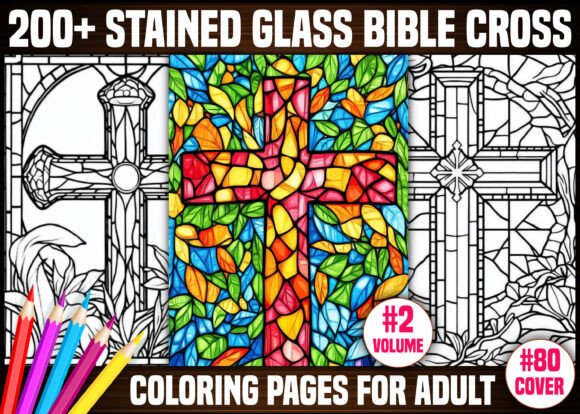
Stained Glass Bible Cross Coloring Pages Amp
As a brand designer and content marketer who’s built visual systems for faith-based publishers, wellness coaches, and Christian small businesses over the past 12 years, I opened Stained Glass Bible Cross Coloring Pages expecting delicate line work—and found something far more strategically useful: a quiet yet confident graphic design asset that bridges reverence and modern visual clarity.
First Impression: Reverent, Refined, Ready for Real Campaigns
The moment you preview these pages, you sense intention—not just religious symbolism, but thoughtful spacing, balanced negative space, and consistent stroke weight. Unlike many Bible-themed clipart sets that lean into cartoonish or overly ornate styles, this collection delivers a modern design sensibility: clean outlines, symmetrical geometry, and stained-glass-inspired segmentation that invites color without demanding perfection. It creates a mood of calm focus—ideal for brands positioning themselves as trustworthy, grounded, and spiritually intentional. This isn’t casual doodle art; it’s a commercial design asset with editorial polish.
Where It Fits Like a Natural Extension of Your Brand Identity
I recently used Stained Glass Bible Cross Coloring Pages to refresh the visual language for a small business launching a Lenten digital product bundle. Instead of generic cross icons or stock photos, we embedded one of the SVG designs into Canva templates for email banners, Pinterest pins, and printable devotion guides. The result? A unified visual thread across touchpoints—no jarring style shifts, no licensing red flags. Because each page is delivered as both PNG and SVG, it scaled flawlessly from Instagram story headers (1080x1920) to printed packaging inserts (300 DPI). That flexibility makes it invaluable for small business branding, especially when you’re managing multiple formats on a tight budget.
Performance Across Key Marketing Touchpoints
- Brand identity & logo design: Not as a primary logo—but as a supporting motif in brand guidelines (e.g., watermarking digital products, framing social bios, or anchoring website footers).
- Packaging design & product labels: Works beautifully as a subtle border element on eco-friendly gift boxes or as a foil-stamped accent on journal covers—especially when paired with muted earth tones or deep navy.
- Social media graphics: Converts exceptionally well on Pinterest—high contrast, clear silhouette, and symbolic resonance boost saves and shares. Also effective as Instagram post backgrounds when overlaid with light text or soft gradients.
- Digital ads & email banners: Performs best in vertical or square formats where its symmetry supports strong visual hierarchy. Avoid placing over busy photo backgrounds—use solid-color backdrops instead.
- Lead magnets & editorial design: Served as the central illustration for a free “Scripture & Stillness” PDF guide—adding gravitas without clutter. Readers reported feeling “seen” and “calmed” before even reading the first line.
Marketing Goals It Strengthens—Without Saying a Word
Stained Glass Bible Cross Coloring Pages quietly advances seven critical marketing goals: it builds audience trust through visual consistency; reinforces brand recognition via repeatable, ownable motifs; deepens emotional connection by evoking sacred pause in fast-scrolling feeds; elevates professional branding with its precise linework; sharpens first impression on landing pages and digital storefronts; improves engagement by inviting interaction (coloring = active participation); and creates more memorable campaign visuals because its structure stands out amid flat, minimalist trends.
Best Use Cases: Hero Graphics, Branded Templates, and Thoughtful Accents
This asset shines brightest where intentionality matters most: hero graphics for faith-based course launches, campaign headers for seasonal offers (Advent, Easter, Back-to-School devotionals), branded Canva templates for church communications teams, social media cover images that reflect spiritual depth, packaging accents for handmade prayer journals, content bundles sold on Etsy or Gumroad, promotional banners for online retreats, editorial layouts in Christian lifestyle blogs, and decorative brand elements like newsletter dividers or digital badge frames.
Careful Use Zones: Context Is Everything
Don’t force it into formal corporate branding (e.g., law firm websites or finance reports), dense information layouts (infographics with 12 data points), small mobile graphics under 100px wide, low-contrast backgrounds (light gray on white), overly minimal brands built on strict monochrome palettes, text-heavy Facebook ads, or designs where the cross competes with your core CTA. Its strength lies in resonance—not redundancy.
Practical Brand Designer Notes You’ll Want to Bookmark
Before dropping Stained Glass Bible Cross Coloring Pages into production: test it against your full brand color palette—not just primary hues, but neutrals and tints; check how it reads in black-and-white (crucial for printables and accessibility); place it inside real campaign mockups (not just isolated previews); preview on mobile screens at actual size; test readability when scaled to 64px for app icons or favicons; compare it visually against top-performing competitor visuals in your niche; see how it pairs with serif fonts (e.g., Playfair Display), sans serifs (e.g., Inter), script fonts (e.g., Pacifico), handwritten fonts (e.g., Qwitcher Grypen), and display fonts (e.g., Bangers); review spacing and balance—does it breathe or crowd? And always confirm the commercial license covers your use case: client work, paid ads, digital product resale, and physical merchandise.
Bottom line: Stained Glass Bible Cross Coloring Pages isn’t just another printable design. It’s a versatile, emotionally intelligent graphic design asset that helps faith-aligned creators communicate depth, care, and craftsmanship—without shouting. Whether you’re building a digital product suite, refreshing a design bundle, or crafting your first social media graphics kit, this set earns its place in your creative marketplace toolkit—not as filler, but as foundation.