Moses Clipart Set – Bible Story Illustrations
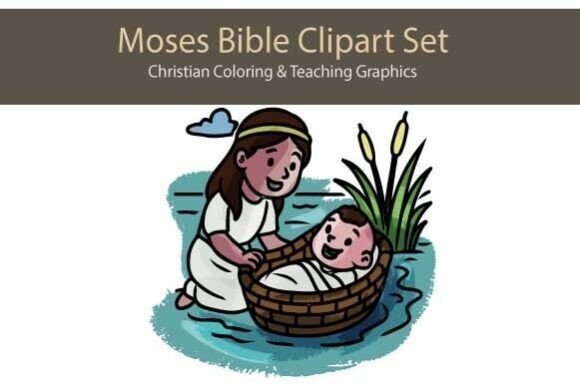
As a brand designer who’s developed visual identities for over 40 local businesses—from artisanal soap makers in Asheville to children’s book publishers in Portland—I recently evaluated the Moses Clipart Set – Bible Story for a real-world project: rebranding a faith-based, family-owned bakery launching a “Bible Story Bakes” seasonal line (think manna muffins, Red Sea rolls, and burning bush cinnamon buns). What stood out immediately wasn’t just biblical accuracy—but how warmly human the illustrations feel. These aren’t stiff, stained-glass silhouettes. They’re gentle, softly outlined figures with expressive hands, flowing robes, and grounded postures—evoking reverence without rigidity. The palette leans into warm ochres, deep indigos, and muted sage greens, suggesting organic authenticity, quiet confidence, and handcrafted care. It reads as friendly yet timeless, devotional but not dogmatic, and illustrative—not decorative. That nuance matters deeply for small business branding.
Where This Graphic Design Asset Fits Like a Well-Knit Apron
The Moses Clipart Set – Bible Story shines brightest where emotional resonance meets tangible utility. For our bakery client, we used individual elements across multiple touchpoints: a simplified staff-and-bush motif became the logo lockup; layered water and cloud shapes formed subtle background textures on packaging sleeves; and the parted-sea silhouette anchored their holiday poster series. It works exceptionally well for:
- Product labels—especially for jars of honey, spice blends, or tea blends where warmth and narrative elevate perceived value;
- Packaging accents—as foil-stamped motifs on kraft boxes or debossed details on cotton drawstring bags;
- Hero graphics—scaled large on café chalkboard menus or Instagram carousels to anchor storytelling;
- Thank-you cards & hang tags—where a single tender illustration (like Moses holding the tablets) adds sincerity without clutter;
- Seasonal campaign visuals—paired with hand-lettered typography for Easter, Pentecost, or back-to-school faith-based product drops;
- Printable design inserts—for boutique gift sets, Sunday school kits, or handmade candle bundles.
In each case, the Moses Clipart Set – Bible Story strengthened first impression, sharpened visual hierarchy, and deepened customer trust—not by shouting doctrine, but by signaling intentionality, care, and cultural fluency.
Real Brand Impact: Beyond Aesthetics
This isn’t clipart you drop in and forget. Used thoughtfully, it becomes part of your brand identity architecture. When applied consistently across packaging design, social media graphics, and in-store signage, it creates continuity that customers subconsciously register as professionalism. On shelf, the soft contrast and clear outlines give our bakery’s gluten-free loaves stronger shelf appeal against competitors using generic wheat icons or overdesigned fonts. Online, the illustrations lend editorial weight to Reels explaining ingredient sourcing—turning a simple “why we use local honey” caption into a cohesive visual narrative. For handmade businesses and creative entrepreneurs, that consistency is currency: it tells customers you’ve invested in your story, not just your stock.
Use With Intention—Not Just Convenience
That said, this graphic design asset has boundaries—and respecting them is key to professional branding. Avoid deploying it in:
- Formal corporate branding—it lacks the austerity needed for law firms or financial advisors;
- Very small labels—fine details (like facial expression or robe folds) dissolve below 0.5" height;
- Crowded packaging layouts—its narrative weight competes with dense ingredient lists or certifications;
- Luxury minimalist brands—the warmth and texture clash with monochrome, ultra-sparse aesthetics;
- Low-contrast backgrounds—transparency in PNG files requires testing against light greys or creams to avoid haloing.
If your brand voice is sleek, clinical, or aggressively modern, this set won’t align—even if the subject matter does.
Practical Designer Notes You’ll Actually Use
Before locking in the Moses Clipart Set – Bible Story for client work or your own small business branding, run these checks:
- Test it on real packaging mockups—not just digital previews—to assess scale, bleed, and print fidelity;
- Convert to grayscale to verify legibility in black-and-white applications (e.g., stamping or embroidery);
- Preview at 25% size on a product label mockup—does the core shape remain recognizable?
- Layer it beside your brand colors: does the ochre robe harmonize with your kraft paper sleeve? Does the indigo water read clearly against cream cardstock?
- Compare it side-by-side with top 3 competitor packaging designs—does it stand out for warmth and clarity, not just theme?
- Inspect SVG files for clean anchor points—critical if you plan to recolor or adapt elements in Illustrator;
- Test transparency in PNGs over textured backgrounds (linen, wood grain, watercolor scans);
- Pair each illustration with serif, sans serif, script, handwritten, and display fonts—note which combinations elevate vs. overwhelm;
- Confirm commercial license covers physical product sales, resale items (e.g., mugs, tote bags), and client deliverables—not just social posts.
For local business owners and creative entrepreneurs, the Moses Clipart Set – Bible Story isn’t filler—it’s a narrative tool. When matched to the right brand personality and applied with craft-level attention, it transforms packaging design from functional to memorable, turns marketing visuals into invitations, and makes every thank-you card feel like a quiet promise kept. That’s not clipart. That’s intentional, values-aligned, small business branding—done right.