Joy to the World Hand Embroidery Pattern
First Impressions: A Warm, Festive Shape That Feels Like Home
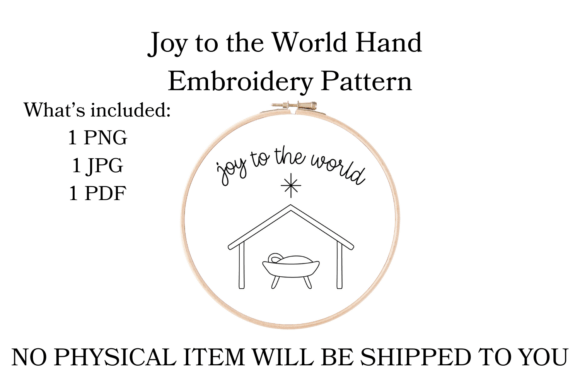
Unrolling Joy to the World Hand Embroidery Pattern feels like opening a well-wrapped holiday card—immediate warmth, clear intention, and zero visual clutter. It’s not overly ornate, but it’s not minimalist either. The composition balances bold lettering with subtle botanical flourishes—think holly sprigs tucked beneath “Joy,” soft curving stems framing “World,” and a gentle, centered rhythm that invites stitching rather than intimidating it. As a designer who’s reviewed hundreds of embroidery files for craft businesses and Etsy sellers, I immediately recognized this as a pattern built for *real use*: it doesn’t rely on tiny details that vanish on textured fabric, nor does it flatten into insignificance on a cozy sweatshirt. Its personality is grounded, joyful without being cutesy, and quietly confident—exactly the kind of design customers remember when they see it on a handmade tea towel or baby onesie.
Real-Life Test: Stitching It Onto a Linen Kitchen Towel for a Boutique Holiday Line
Last week, I used Joy to the World Hand Embroidery Pattern to create limited-edition kitchen towels for a local craft shop’s holiday pop-up. We chose natural linen—medium weight, visible weave, slightly uneven texture—and stitched using 3-ply cotton floss in deep forest green, cream, and brick red. The result? Crisp legibility at 4.5 inches wide, even across the fabric’s subtle bumps. The letterforms held their shape beautifully in satin stitch, and the holly leaves translated cleanly in lazy daisy and stem stitch—no bleeding, no thread snagging. Customers responded strongly: multiple asked where to buy the pattern itself. That tells me this isn’t just a pretty sketch—it’s a functional, emotionally resonant embroidery file that strengthens brand trust and supports repeat gifting.
Where It Shines (and Where to Pause)
Joy to the World Hand Embroidery Pattern excels on stable, medium-weight fabrics: canvas tote bags, cotton aprons, brushed cotton sweatshirts, and pillow covers. It reads clearly at 3–5 inches wide—ideal for custom apparel, embroidered patches, and nursery decor. For Etsy sellers, it’s a strong candidate for digital embroidery file listings paired with printable mockups; its clean lines render well in both color and grayscale previews. Small business owners will appreciate how easily it adapts to boutique branding—swap thread colors to match a shop’s palette, and it feels instantly cohesive.
That said, I’d advise caution in three real-world scenarios:
- On highly textured or napped fabrics (like heavy terry cloth or fleece): the finer holly details may soften too much—test first on scrap, and consider simplifying leaf outlines if needed.
- For curved surfaces (caps or curved brim hats): the balanced width works, but avoid placing it too close to the seam or crown curve unless you’re using a flexible stabilizer and reducing stitch density slightly.
- On dark or black fabric: the original thread palette assumes light-to-mid backgrounds. For dark fabric, swap to high-contrast threads (ivory, gold, or white) and confirm readability in your final hoop size—some letter spacing tightens visually on deep backgrounds.
Design Integrity Meets Commercial Practicality
What sets Joy to the World Hand Embroidery Pattern apart from trend-chasing holiday designs is its quiet craftsmanship. It avoids over-stitching—no dense fill areas that cause puckering on thin baby clothes or lightweight tea towels. The stitch density feels intentional, not excessive. That directly impacts product value: finished items hold up through washing, maintain their handmade presentation, and look professionally executed—not “crafty” in a dated sense, but authentically considered. For creative entrepreneurs selling personalized gifts or small shop merchandise, that nuance builds customer confidence. When someone receives a sweatshirt with this design stitched cleanly on the chest, they don’t see “holiday embroidery”—they see care, consistency, and intention.
Designer Notes You’ll Actually Use
Before cutting fabric or listing on Etsy, here’s what I do—and recommend you do—with Joy to the World Hand Embroidery Pattern:
- Test on scrap fabric *with your exact thread and stabilizer*. Linen behaves differently than quilting cotton; cotton jersey stretches differently than denim.
- Check thread color contrast on both light and dark backgrounds—even slight shifts in hue affect recognition.
- Review small details at actual stitch-out size: those holly berries are charming, but if your hoop is under 4 inches, they may blur. Zoom in on your embroidery software preview.
- Use proper cutaway or tear-away stabilizer based on fabric weight—especially for stretchy or loosely woven materials.
- Confirm licensing terms before selling finished products or bundling this as part of a digital product suite. Crafts category patterns vary widely in commercial use permissions.
- Run a black-and-white mockup: if it holds impact without color, it’ll translate across seasonal palettes and custom requests.
Final Thought: A Design That Earns Its Place
Joy to the World Hand Embroidery Pattern isn’t flashy—but it doesn’t need to be. It’s the kind of embroidery file that earns repeat use because it delivers consistently: on baby onesies, holiday aprons, boutique tote bags, and personalized gifts alike. It respects the maker’s time, the fabric’s behavior, and the customer’s eye. For designers building a library of reliable, sellable embroidery assets—and for craft businesses turning holiday demand into lasting relationships—this pattern doesn’t just fill a seasonal slot. It becomes a trusted tool.